
The processing of appeals
At the Supreme Administrative Court, cases are primarily processed through written proceedings on the basis of documentary evidence.
The interested parties and the public authority that made the decision are obliged to provide the information necessary for the consideration and resolution of the case in terms of their own claims and the grounds on which they are based. The Supreme Administrative Court must ensure that the case is investigated ex-officio to the extent required by the principles of impartiality, fairness and the nature of the case. If, for example, the petition of appeal is incomplete, the Supreme Administrative Court will ask the appellant to provide further information.
The referendary for the case prepares a reasonable proposal for a decision on the case at hand for the decision-making panel, which examines the case and issues a decision on it. Before reaching a decision, the Supreme Administrative Court considers all the facts that have come to light and assesses which of them are relevant to the decision.
Decisions on whether to grant or refuse leave to appeal, as well as the merits of the appeal itself, are always determined by a panel of the Supreme Administrative Court comprising the referendary and members, i.e. the judges.
If the members involved in the decision-making are not unanimous, the decision is put to a vote. The Supreme Administrative Court always issues its decision in writing.
The Supreme Administrative Court processes applications for leave to appeal, appeals and extraordinary appeals submitted to it broadly in accordance with the stages described below. The stages are general guidelines, and the process may differ from that described below in individual cases.
Simplified process of appeals
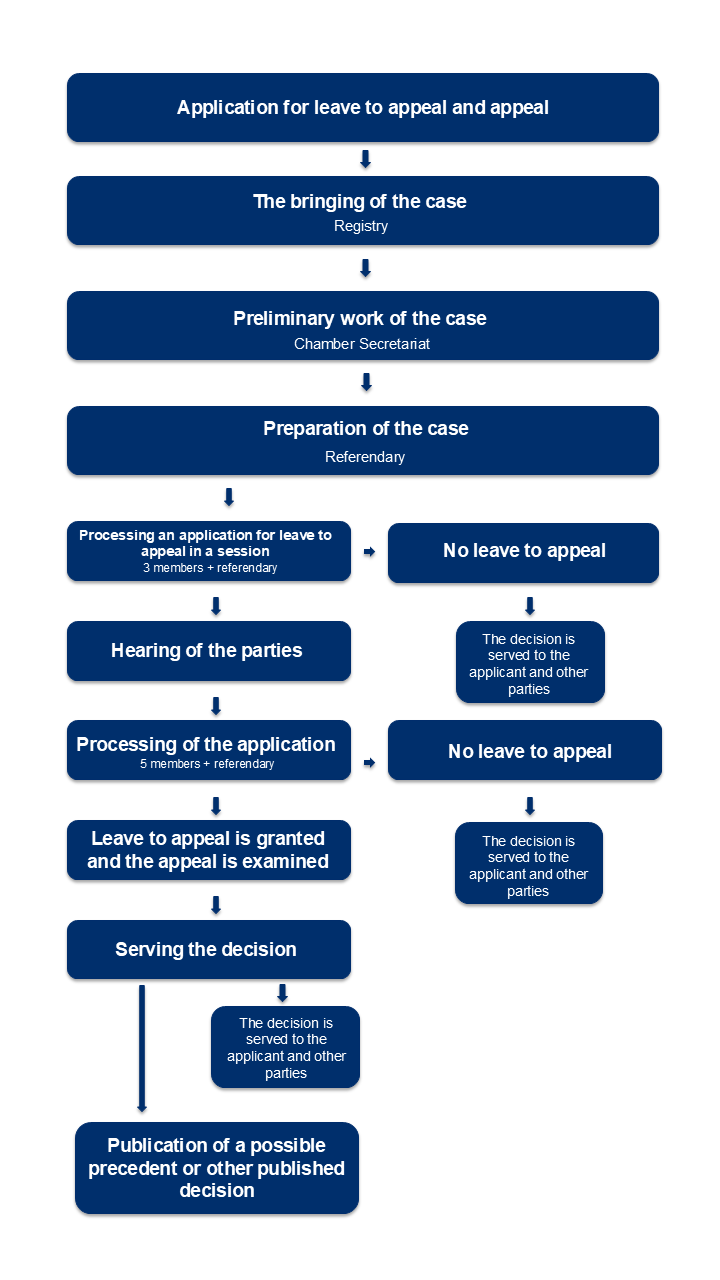
More information about the stages of processing an appeal here: